
Foothill Trees and Your Gutters
The trees are a big part of why people love living along the foothills. They are also the reason most of our gutter calls happen. Here is what the common trees around Pasadena and the neighboring cities drop into your gutters, when it tends to happen, and why it matters.
We reply in minutes, often same-day. 7 days a week, 7am to 7pm.
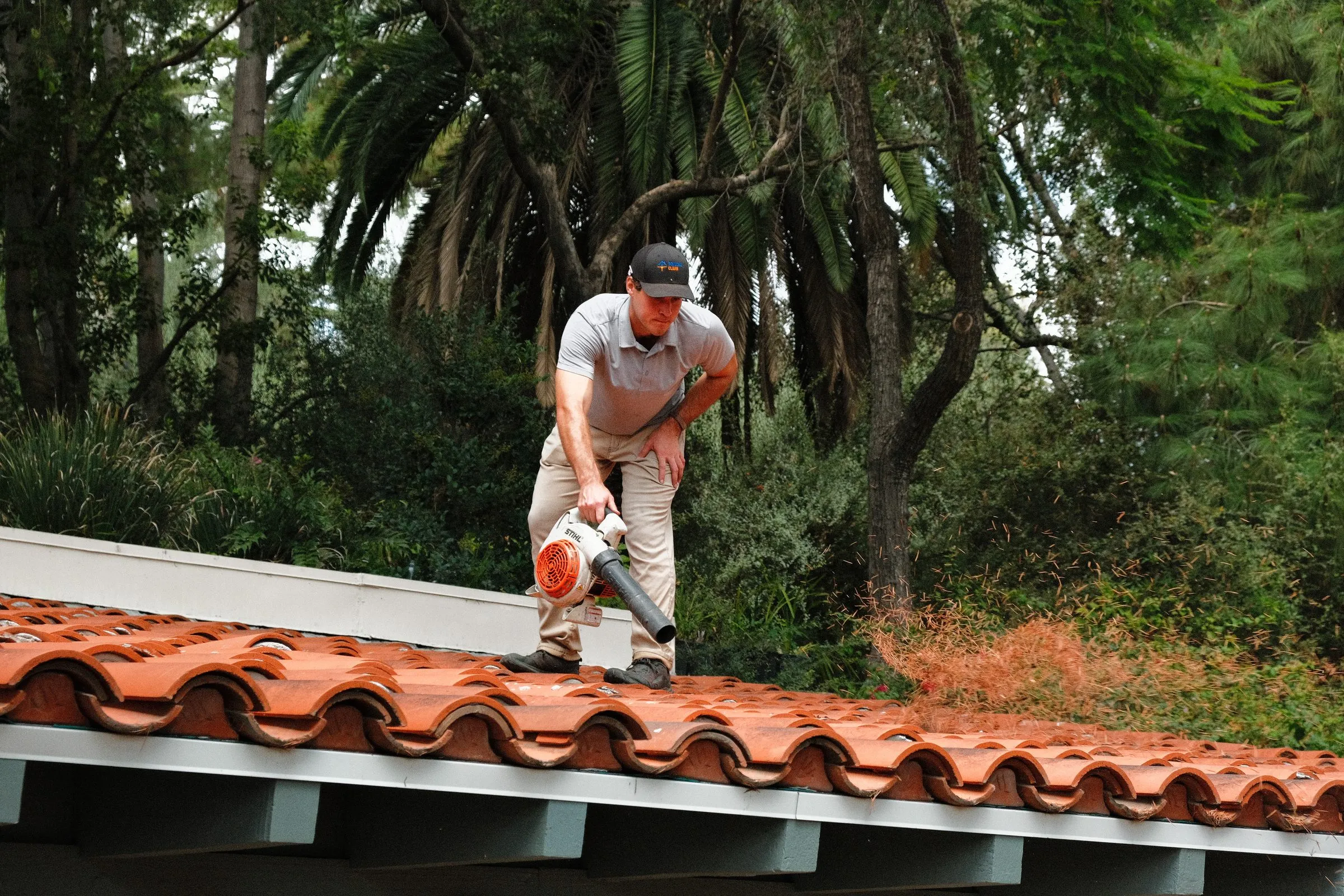
Eucalyptus and oaks.
Eucalyptus
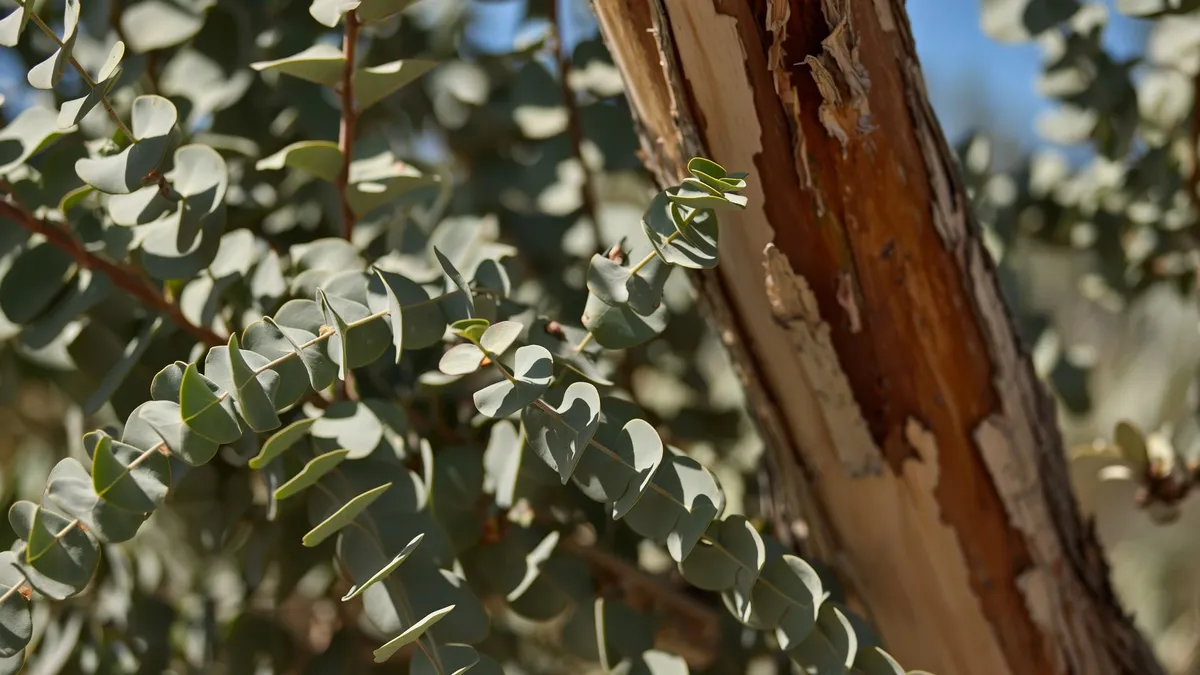
Eucalyptus trees never really stop shedding. The bark peels off in long, papery strips that drape across the roof and slide down into the gutter, where they lie lengthwise and act like a dam. The leaves are long, tough, and leathery, so they take a long time to break down. They also carry natural oils, the same ones that give the trees their strong smell. Those oils help the leaves shrug off rain, which means a pile of eucalyptus debris stays bulky and dry far longer than you would expect, and it burns easily once it is dry.
Oaks
Oaks are generous in a few different ways. In spring they drop catkins, the stringy, tan flower clusters that look a little like shredded twine. Catkins are light, so they blow into every gutter on the block, and once they get wet they turn into a fine, clingy mat. Later in the year come the acorns, which roll down the roof and sit in the gutter or in the top of a downspout like marbles in a drain. Then there are the leaves themselves. Many of the oaks around here are evergreen and swap out old leaves for new ones a little at a time, so a big oak over the house is adding something to the gutter for much of the year, not just in the fall.
A lot of Pasadena-area streets sit under mature native oaks, some of them planted generations ago. Coast live oaks keep their leaves all year, but in spring they let go of last year's leaves as the new growth comes in. The pollen catkins follow, and then the acorns arrive in fall and early winter. In practice, that means your gutters are collecting oak debris in almost every season, not just in autumn.
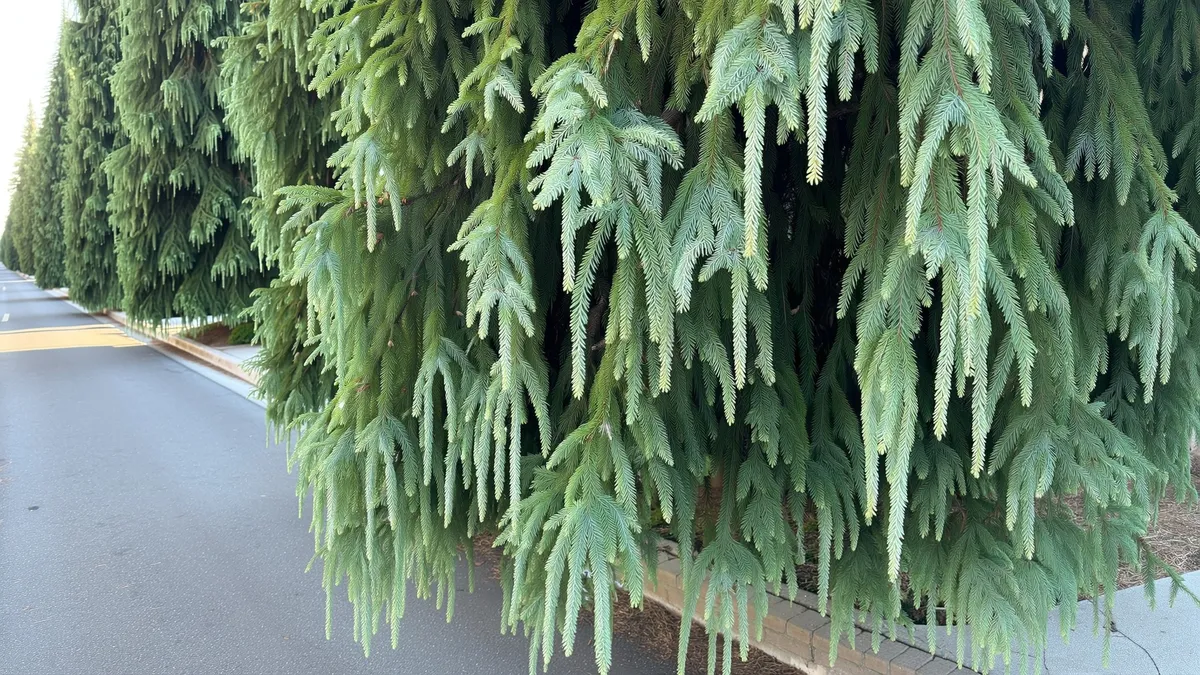
Deodar cedars and pines.
If you have ever walked Christmas Tree Lane in Altadena, you have seen how big and beautiful deodar cedars get. The street is lined with them, and every December the whole stretch is strung with lights. Those same trees, and the deodars and pines scattered through yards all over the area, are some of the hardest trees on gutters.
The problem is the needles. They are short and fine, and they land by the thousands. In a gutter they knit together into a dense mat that water skims right over instead of draining through. They also slip through or settle on top of gutter screens, and they are small enough to slide into the downspout, where they pack down and plug it from the inside. A downspout full of needles can look fine from the ground until the first heavy rain, when water starts pouring over the front of the gutter instead.
Pine cones and cedar cones add to it. They are not usually the main clog, but they catch everything else, the way a rock in a stream collects sticks.
Jacaranda, crape myrtle, sweetgum, and ficus.
Jacaranda and crape myrtle

When the jacarandas bloom, whole streets turn purple, and a lot of that purple ends up on the roof. The blossoms are soft and a little sticky. In the gutter they mash together into a damp paste that holds onto everything around it. Crape myrtles do the same thing a bit later in the summer, dropping small, crinkly flowers, and then seed capsules after that. Neither one looks like much on its own, but a season of blooms packed into a gutter is surprisingly hard to move.
Sweetgum
Sweetgum trees are easy to spot by their spiky seed balls, the ones that hurt to step on barefoot. Those balls roll into gutters and lodge at the top of downspouts, where their spikes hook onto leaves and needles and start a clog. In the fall, sweetgums put on a great show of red and orange leaves, and then drop all of them in a short window, often right before the rain arrives.
Ficus
Ficus trees are common along streets and property lines because they stay green and grow dense. That density means a steady drop of small leaves through the year. Many ficus trees also drop small fruit, which adds a soft, messy layer to the debris and attracts birds, who leave their own mess behind. On their own, none of these clog a gutter overnight. Together, they keep it filling up a little at a time, year round.
Santa Ana winds, fire, and standing water.
Santa Ana winds and fire risk
The Santa Ana winds that come through in fall and winter do two things to your gutters. First, they strip trees and push a burst of leaves, needles, and bark onto the roof all at once. Second, they dry all of that debris out. A gutter full of dry eucalyptus leaves, oak leaves, and pine needles sits right at the edge of the roof, which is exactly where wind-blown embers tend to land during a fire. Clearing that fuel out is one of the simplest things you can do to make a home in the foothills a little safer, and fire agencies recommend it for that reason.
Standing water and mosquitoes
When a gutter or downspout clogs, the water that should drain away sits in the gutter instead. Even a shallow puddle held behind a mat of needles or blossoms can stay put for days after a rain or a sprinkler cycle. Mosquitoes only need a small amount of still water to breed, so a clogged gutter can turn into a quiet mosquito nursery right above your back door. The same standing water also soaks the fascia boards behind the gutter and adds weight that pulls on the hangers.
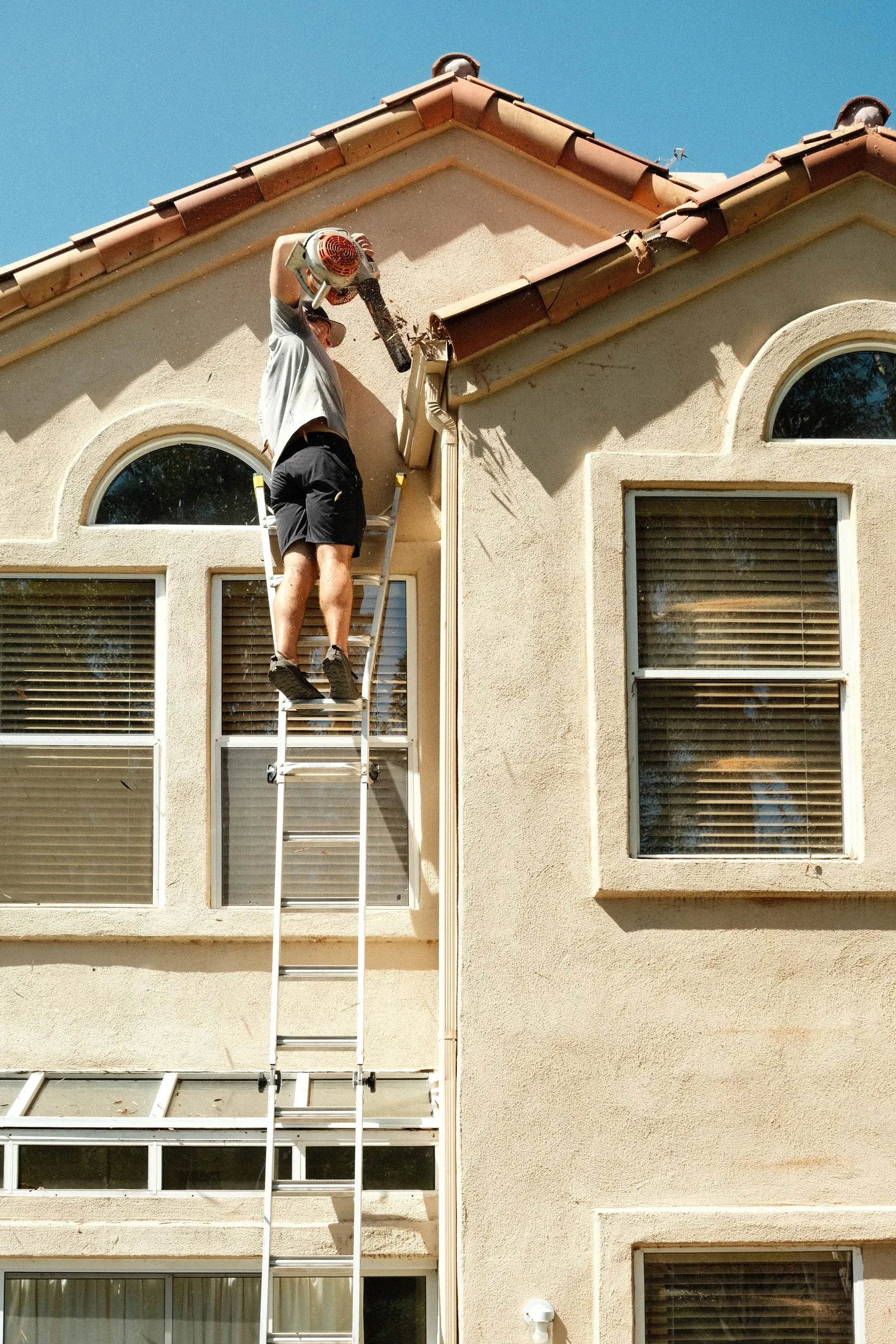
So when should you clean?
There is no single schedule that fits every yard. Different trees drop at different times, a tree that hangs over the roof matters more than one across the yard, and some years are simply heavier than others. As a rule, homes under heavy canopy usually need more frequent cleaning than homes with open sky above them, and homes with a mix of trees tend to have something landing in the gutters most of the year.
The good news is that you do not have to work it out alone. When we come out for a gutter cleaning, we clear every gutter, flush and test every downspout, haul all the debris away, and send you before-and-after photos. We will also tell you which trees are doing the most damage and what we would keep an eye on before the next storm.
See everything that is included on our gutter cleaning page, or reach out and we will take a look at your roofline.

Leaf and berry stains on concrete and stucco.
The same trees that fill your gutters can mark up your driveway, patio, and walls. When leaves, acorns, and berries sit wet on the ground or against the house, natural tannins leach out of them and soak into porous surfaces like concrete and stucco. What is left behind is a brown or rust-colored shadow of the leaf, and once it has set in, a garden hose will not lift it.
The easiest fix is prevention. Clearing debris off the roof, out of the gutters, and away from walkways on a regular schedule means wet leaves are not sitting in one spot long enough to stain. Downspouts that drain properly also help, since overflowing gutters tend to dump leaf-tinted water down the same stretch of stucco every storm.
For stains that have already set in, ourpressure washing service pre-treats the stained areas first, then cleans the whole surface evenly. That order matters. Blasting only the dark spots tends to leave patchy, lighter halos that can look worse than the stain did. Pre-treating and cleaning evenly gives you a surface that looks consistent from one end to the other.
Get a free gutter cleaning quote.
Leave your name and number. We reply in minutes, often same-day, with a straight answer and no obligation.
Rather talk? Call (626) 517-9525.
Trees and gutters, answered.
Which trees are hardest on gutters around Pasadena?
Deodar cedars and pines are near the top of the list, because their needles mat together and slip past screens into downspouts. Eucalyptus is a close second for its bark strips and oily leaves. Oaks, sweetgum, jacaranda, crape myrtle, and ficus all add their own kind of mess at different times of year.
How often should I clean my gutters if I have a lot of trees?
It depends on the trees, how close they are to the roof, and how much they drop in a given year. Homes under heavy canopy usually need more frequent cleaning than homes with open sky above them. If you see plants growing in the gutter or water spilling over the side in a light rain, it is overdue.
Do gutter guards stop pine and cedar needles?
Not completely. Short, fine needles work their way through many screens or pile up on top and form a mat that water runs right over. The gutters still need clearing, and guards can make that job slower.
Is dry debris in my gutters really a fire risk?
It can be. Dry leaves, needles, and bark in a gutter sit right at the roof edge, where wind-blown embers tend to land. Keeping gutters clear before and during Santa Ana season is one of the simple steps fire agencies recommend for homes near the hills.
Can clogged gutters breed mosquitoes?
Yes. A clog holds a shallow pool of water in the gutter, and mosquitoes only need a small amount of still water to breed. Clearing the debris lets the gutter drain fully after rain or sprinklers.
Gutter cleaning under the foothill canopy.
Squeegee Clean Windows is based at 400 N Oakland Ave Unit 201 in Pasadena, and we clean gutters in Pasadena, South Pasadena, San Marino, Altadena, Arcadia, Sierra Madre, Glendale, La Cañada Flintridge, Monrovia, Temple City, and San Gabriel. Ready when you are: gutter cleaning or a free quote.